Booking choice: The private Fukuoka walk, ★ 4.7 (47). Check dates Compare the options below
Fukuoka does not have a long list of famous sights, and that works in your favour. Most visitors see Canal City, Ohori Park and the yatai, and leave. The places below are just as easy to reach, most of them by subway or on foot, but they are calmer, older or simply less known to travellers. Nothing here needs a ticket unless we say so.
Each place comes with how to get there. If you only have a day, combine two or three of the temple stops with the one-day route; for trips further out, see Fukuoka in three days. Where to stay while you explore is in Hakata or Tenjin.
The quick answer
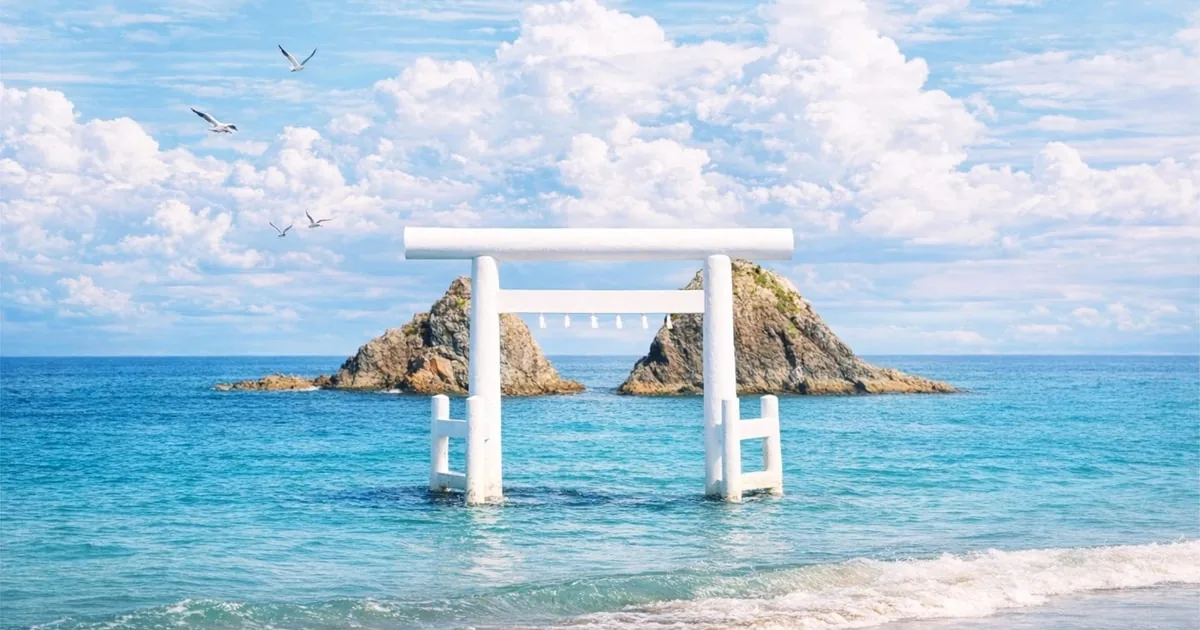
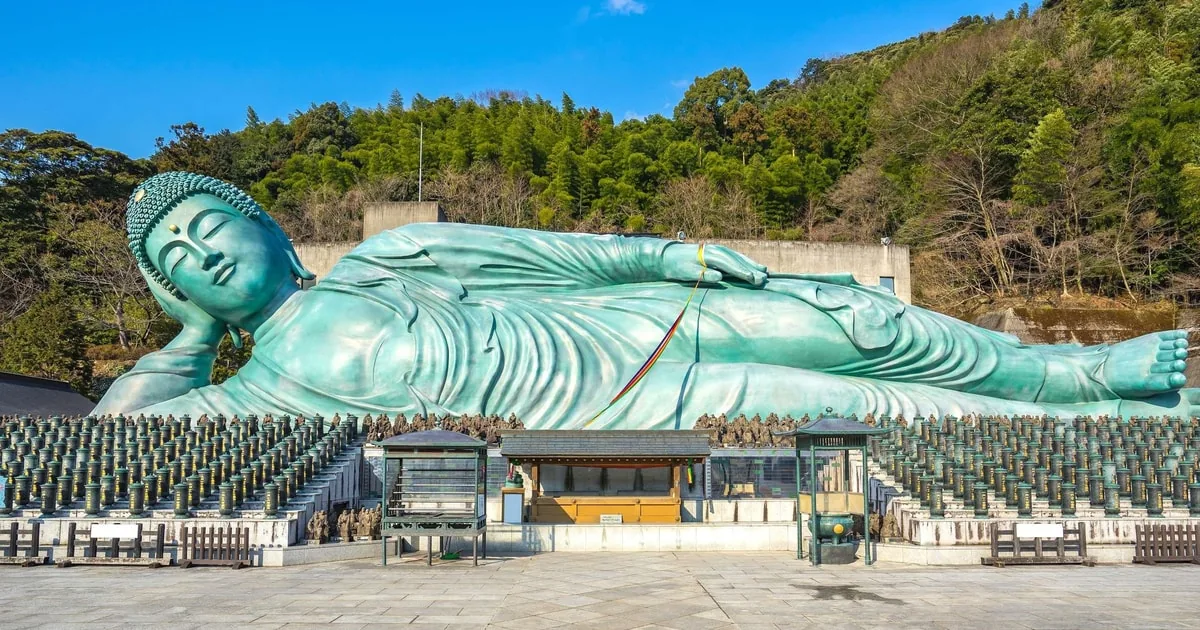
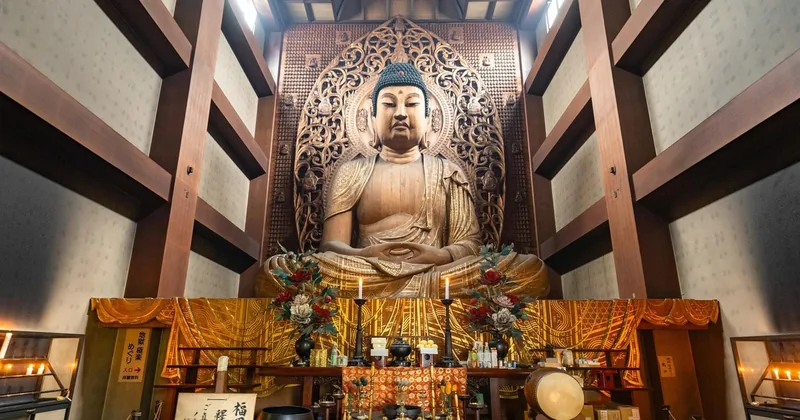
The best-kept secret in Fukuoka is the temple quarter of old Hakata, entered through the wooden Hakata Sennen-no-mon gate: Shofukuji, founded in 1195 and described as Japan's first Zen temple, Jotenji with its monument to the birth of udon and soba, and Tochoji's great wooden Buddha, all within a few minutes' walk of Gion subway station. Other hidden gems in the city are Sumiyoshi Shrine, the Rakusuien merchant garden near Hakata Station, the Japanese garden in Ohori Park, the Yanagibashi Rengo market, Hakozaki Shrine and the flower island of Nokonoshima, about ten minutes by ferry. Just outside the city are Nanzoin's bronze reclining Buddha in Sasaguri, about 25 minutes by JR train from Hakata, Itoshima's Meoto Iwa rocks with a white torii in the sea, and the red torii of Ukiha Inari Shrine.
What are some hidden gems in Fukuoka?
The quiet temples of old Hakata, two small gardens, a covered food market and an island in the bay inside the city, and a giant bronze Buddha, a coastal shrine and a hillside of red torii within about an hour. The table shows how to reach each one.
Most of these take an hour or two, and several sit close enough to combine: the temple quarter with Sumiyoshi Shrine and Rakusuien, or Ohori Park's Japanese garden with the castle ruins next door. Times below are approximate journeys from Hakata Station or Tenjin.
| Place | What it is | How to get there |
|---|---|---|
| Shofukuji and Jotenji | Japan's first Zen temple and the udon and soba monument | About 10 minutes on foot from Hakata Station; Gion station is closest |
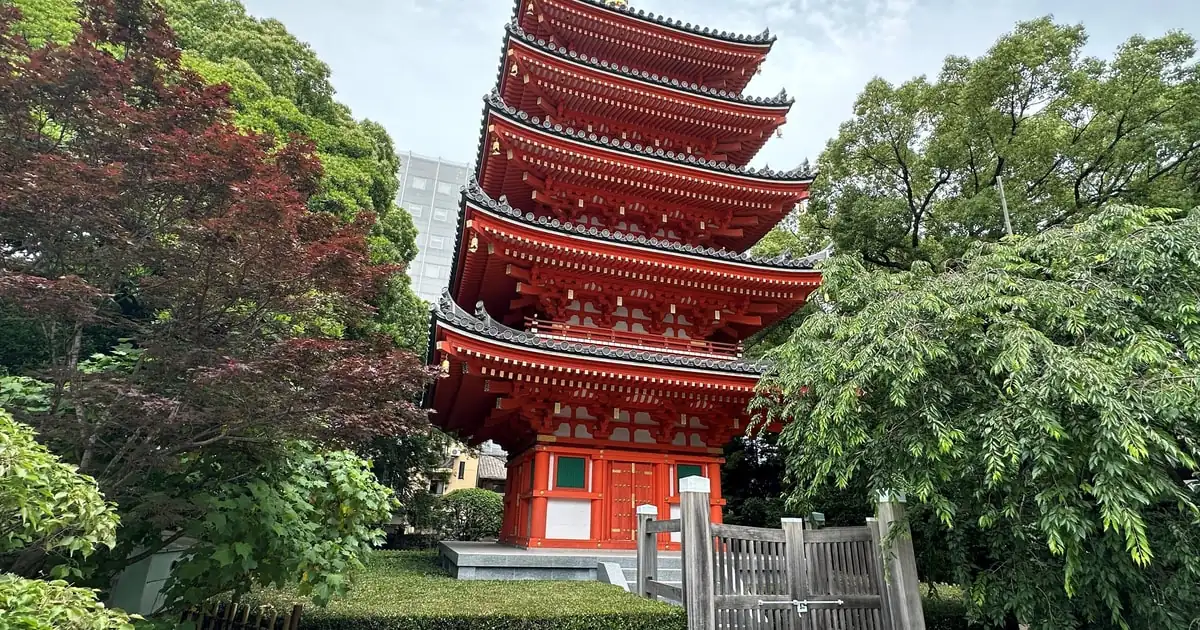
| Tochoji | Red pagoda and a great wooden Buddha | A few minutes from Gion station |
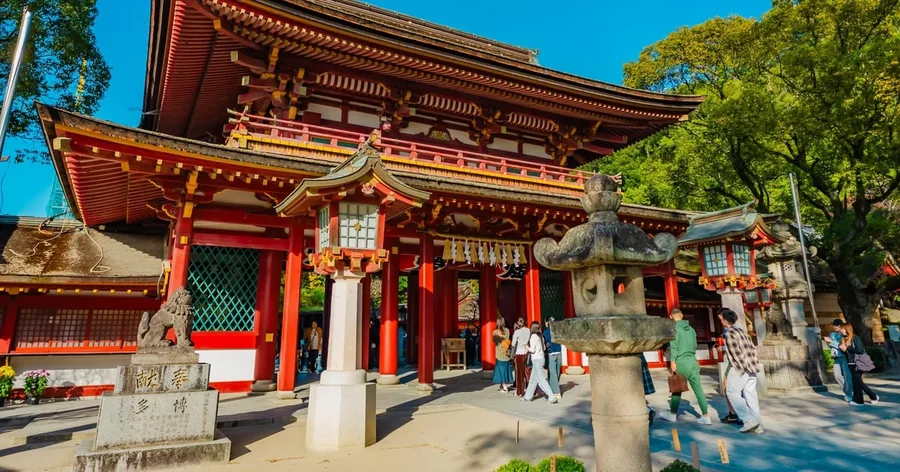
| Sumiyoshi Shrine | One of Japan's oldest Sumiyoshi shrines | About 10 to 15 minutes on foot from Hakata Station |
| Rakusuien | A 1906 merchant's garden with tea rooms | About 12 minutes on foot from Hakata Station |
| Ohori Park Japanese Garden | A traditional garden inside the lake park | Subway to Ohorikoen, two stops west of Tenjin |
| Yanagibashi Rengo Market | Hakata's covered kitchen market | A short walk from Watanabe-dori station |
| Hakozaki Shrine | One of Japan's three great Hachiman shrines | About 3 minutes on foot from Hakozaki-miyamae station |
| Nokonoshima | Flower island in Hakata Bay | Subway to Meinohama, then about 10 minutes by ferry |
| Nanzoin | A giant bronze reclining Buddha | JR Sasaguri Line, about 25 minutes, then a 5-minute walk |
| Meoto Iwa, Itoshima | Twin rocks and a white torii in the sea | About 1 hour by the West Coast Liner bus |
| Ukiha Inari Shrine | 91 red torii on a hillside | About an hour to JR Ukiha Station, then 25 minutes on foot |
What is the best kept secret in Fukuoka?
The temple quarter of old Hakata. Behind the Hakata Sennen-no-mon gate lies Shofukuji, founded in 1195 by the monk Eisai and described as Japan's first Zen temple, in grounds that are often almost empty in the morning.
Start at the Hakata Sennen-no-mon, a wooden gate completed in March 2014 as the entrance to Hakata Old Town, built with camphor wood donated by Dazaifu Tenmangu. Beyond it, a cluster of temples fills the blocks between Hakata Station and the Naka River. Shofukuji is the oldest name among them: Eisai, who founded it after returning from China, is also credited with bringing tea seeds to Japan. Its halls are generally not open to visitors, so the visit is the grounds: stone paths, old trees, moss and walls, and a stillness that feels far from the station ten minutes away.
Next door, Jotenji was founded in 1242 by the monk Enni after his return from Song China. Stone monuments in its grounds mark it as the place where udon and soba, and the sweet buns called manju, are said to have first come to Japan. It is a small detail that most visitors miss, and a good one to share over a bowl of udon later. Go early; the lanes are quietest before about 10 am.
One reviewer said the temples would have taken days of hits and misses to find alone: a private walk shaped around your interests fixes that in a morning.
Check dates for the private Fukuoka walkWhat else is hidden in old Hakata?
Tochoji's great wooden Buddha, Sumiyoshi Shrine's quiet grounds, and the Hakata Machiya Folk Museum opposite Kushida Shrine. All three are within a short walk of the temple quarter.
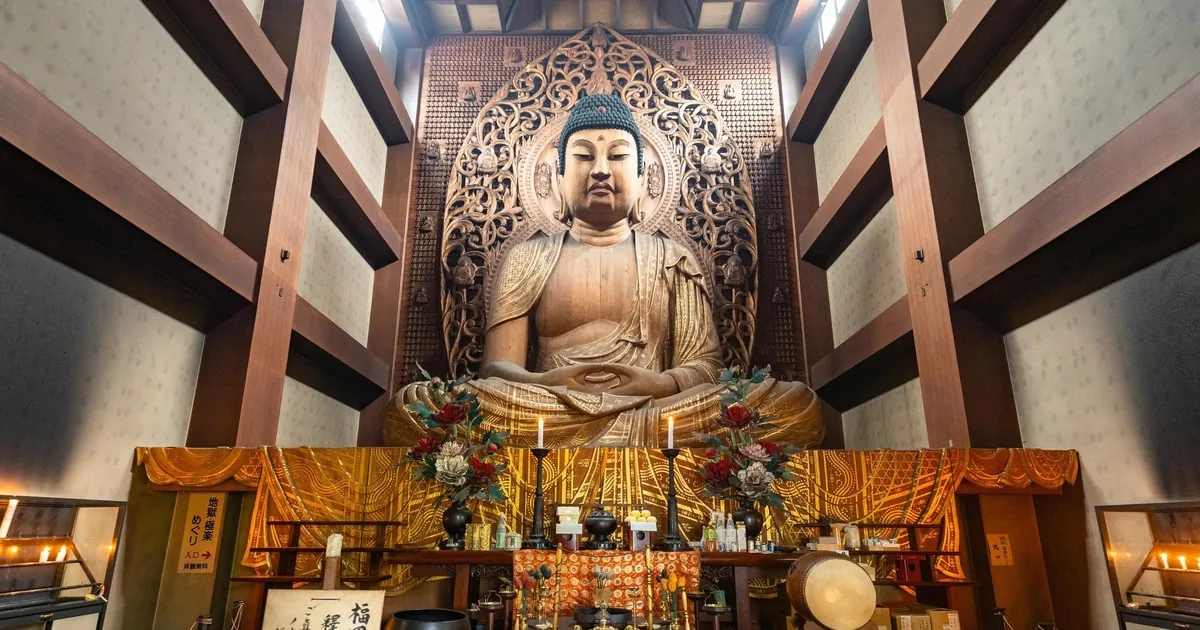
- Tochoji: a Shingon temple that traces its history to 806, with a red five-storey pagoda and, in its Great Buddha hall, the Fukuoka Daibutsu, a wooden seated Buddha about 10.8 m tall, among the largest in Japan. Visitors describe a dark passage beneath it that you walk through by touch. A few minutes from Gion station.
- Sumiyoshi Shrine: one of Japan's oldest Sumiyoshi shrines, in a wooded compound south-west of Hakata Station, about 10 to 15 minutes on foot. It feels a world away from Canal City, a few minutes' walk away.
- Hakata Machiya Folk Museum: a Meiji-era merchant house opposite Kushida Shrine, with exhibits on Hakata's festivals and crafts and daily demonstrations by artisans, from doll makers to weavers.
- Kushida Shrine's float: Kushida itself is no secret, but many visitors miss the decorated Yamakasa float, over 10 m tall, on display in the grounds all year except June.
The Hakata old town culture tour strings several of these together in five hours, with admission to the folk museum, time to browse Hakata crafts and a lantern-painting workshop.
Kushida Shrine, the folk museum, the water of longevity and a lantern you paint yourself: five hours in old Hakata in a group of up to eight.
Check dates for the Hakata old town and lantern tourWhere are Fukuoka's quiet gardens?
Rakusuien, a merchant's villa garden from 1906 near Hakata Station, and the Japanese garden inside Ohori Park. Both are small, calm and rarely crowded.
Rakusuien was built in 1906 as the villa of a Hakata merchant and reopened by the city in 1995 with tea rooms, so you can sit with a bowl of matcha and look out over the garden. It is about 12 minutes on foot from Hakata Station, close to Sumiyoshi Shrine, which makes the two an easy pair.
Ohori Park Japanese Garden sits at the southern end of Ohori Park, the lake park built from 1926 to 1929 from part of the old castle moat. Most visitors walk the path of about 2 km around the lake and never go in. Inside is a quiet traditional garden of ponds, stones and pines. Take the subway to Ohorikoen, two stops west of Tenjin, and combine it with the stone walls of the Fukuoka Castle ruins, a park open to everyone right next door.
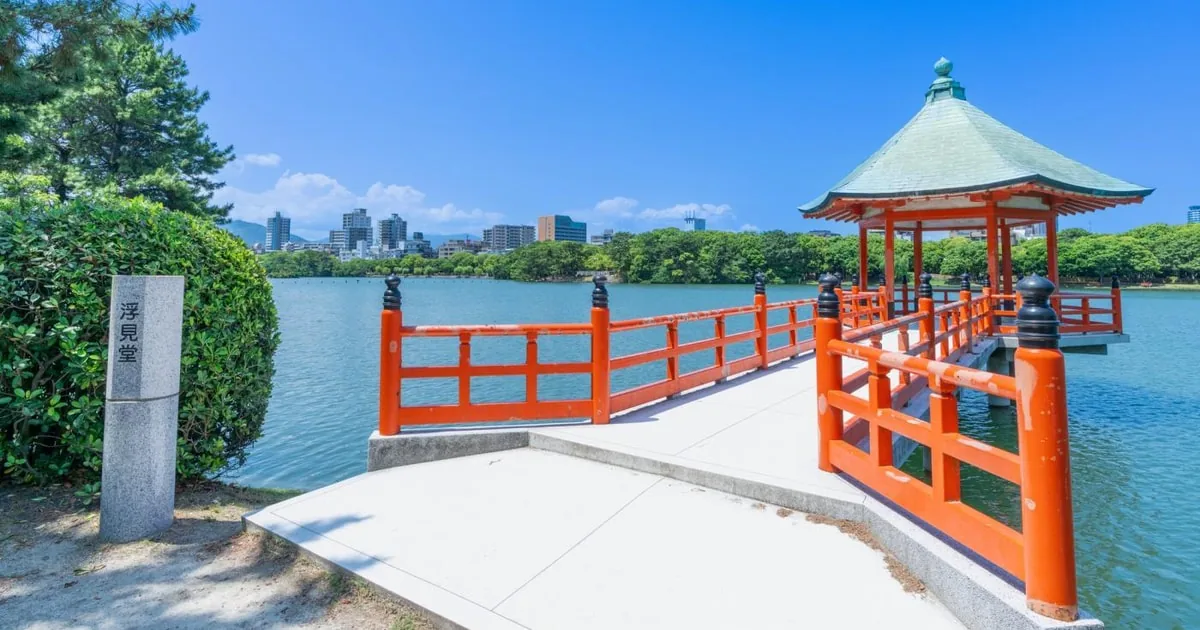
A local guide who plans the day with you: a private walk of two to four hours, at your pace, with the quiet corners you asked for.
Check dates for the private Fukuoka walkWhere do locals shop for food in Fukuoka?
At the Yanagibashi Rengo market, a covered street of fishmongers and small eateries known as Hakata's kitchen, and, on a few Saturday mornings a year, at the Nagahama fish market.
Yanagibashi Rengo Market is a covered lane of about 100 m lined with fishmongers, mentaiko sellers, greengrocers and tiny counters serving breakfast and lunch. It is a working market for the city's cooks, so go in the morning on a weekday, when it is busiest and every stall is open. It is a short walk from Watanabe-dori station on the Nanakuma Line, or about 15 to 20 minutes on foot from Tenjin.
Nagahama Fresh Fish Market is a wholesale market, open to the trade only on normal days. It opens to the public on a few Saturday mornings a year for a citizen appreciation day, with fish sales and food stalls; the next date is 10 October 2026, and 7 November is planned. Nagahama is also the home of the late-night ramen stalls that gave Fukuoka the kaedama noodle refill. The dishes to look for are in what to eat in Fukuoka.
Which quiet places are worth a subway or ferry ride?
Hakozaki Shrine, one of Japan's three great Hachiman shrines, three minutes from its subway station, and Nokonoshima, an island of flower fields in Hakata Bay about ten minutes from the mainland by ferry.
Hakozaki Shrine (Hakozakigu) is one of Japan's three great Hachiman shrines, with a long approach running down towards the sea. Most days it is calm; in mid-September it fills for the Hojoya festival, which draws about a million visitors over seven days and nights (12 to 18 September in 2026). Take the Hakozaki Line to Hakozaki-miyamae station, about 3 minutes on foot.
Nokonoshima is a green island in Hakata Bay. Nokonoshima Island Park, a flower park of about 150,000 m2, is planted with flowers that change with the seasons, with views back across the water to the city. Take the Airport Line to Meinohama at its western end, a short bus ride to the ferry terminal, then the ferry, about 10 minutes; a bus on the island connects the port with the park. Allow half a day.
Which hidden gems are just outside Fukuoka?
Nanzoin's bronze reclining Buddha in Sasaguri, the Meoto Iwa rocks at Itoshima and the red torii of Ukiha Inari Shrine. Each makes a half day or a full day from the city.
- Nanzoin (Sasaguri): a bronze reclining Buddha 41 m long and 11 m high, completed in 1995, which the temple describes as the largest bronze reclining statue in the world. Rows of small stone statues, forest paths and waterfalls fill the hillside around it. Take the JR Sasaguri Line from Hakata to Kido-Nanzoin-mae, about 25 minutes, then walk about 5 minutes.
- Itoshima: west of the city, a coast of beaches and cafes. At Sakurai Futamigaura, the twin Meoto Iwa rocks stand in the sea, joined by a rope, with a white torii in front of them. The Showa Bus West Coast Liner reaches Futamigaura from Hakata and Tenjin in about an hour; Shiraito Falls inland is easiest by car.
- Ukiha Inari Shrine: 91 red torii climb a hillside to a shrine with wide views over the Chikugo plain. Ukiha is about an hour from Hakata; from JR Ukiha Station, the walk takes about 25 minutes. Best combined with a day in the countryside.
If you would rather not work out the trains, the customized tour with a local guide picks you up at your hotel; its six-hour version often starts at Nanzoin and continues through the temples of old Hakata.
Nanzoin in the morning, the temples of old Hakata in the afternoon: a customized tour with hotel pickup, planned with you, from two to six hours.
Check dates for the customized Fukuoka tourWhich city is the prettiest in Japan?
Taste varies, and there is no single answer. Kyoto and Kanazawa are the names most often given for traditional beauty; Fukuoka's appeal is different, an easygoing mix of sea, temples and food in a city small enough to cross in minutes.
If prettiest means wooden townhouses, famous gardens and temple after temple, Kyoto is hard to beat, and Kanazawa is the favourite of many travellers who want that without the crowds. Fukuoka is not that kind of postcard city. Its charm is in contrasts: a Zen temple ten minutes from a shinkansen platform, a castle park beside a lake, beaches and islands a short ride away, and stalls cooking ramen by the river at night.
Many travellers end up liking it for exactly that. The city is relaxed, walkable and safe, day and evening, and it rewards slow days: a morning in the temple quarter, an afternoon at the sea, a yatai at dusk. For when the city looks its best, from cherry blossom to autumn colours, see the best time to visit.
Frequently asked questions
Can you go inside Shofukuji?
You can walk the grounds, which are open to everyone and need no ticket. The halls are generally not open to visitors, so plan a short, quiet visit rather than a temple tour. One reviewer of a customized tour noted that the temple does not permit large groups, which helps keep it calm.
Is Nanzoin worth the trip?
Yes, if you have half a day. The reclining Buddha is enormous, 41 m long, and the hillside around it has small shrines, stone statues and forest paths. It is about 25 minutes from Hakata on the JR Sasaguri Line, and it pairs well with an afternoon in old Hakata.
When is the Nagahama fish market open to the public?
Only on a few Saturday mornings a year, for citizen appreciation days. The next date is 10 October 2026, with 7 November 2026 planned; check the city tourism site before you go. On other days it is a wholesale market for the trade.
Are the hidden gems open all year?
Most are. The temple grounds and shrines can be visited every day; gardens and museums keep opening hours and close some days, so check before you go. Nokonoshima's flower fields change with the seasons, and the ferry may stop in rough weather.
Ready to book
Choose your tour
Check your date and the live price on GetYourGuide; the refund terms are shown on each option.
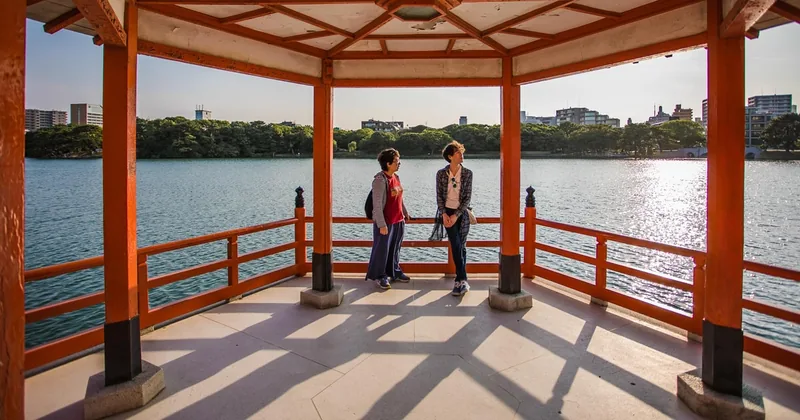
Private Fukuoka Walk, Built Around You
A short questionnaire first, then a route for food, history, art or neighbourhoods
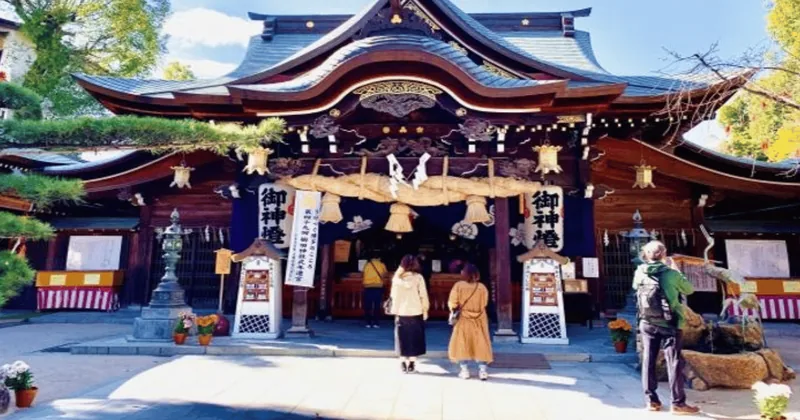
Hakata Old Town and Lantern Painting
Kushida Shrine, the Hakata Machiya Folk Museum and a lantern to paint and keep
Fukuoka Essentials: Hakata Walking Tour
- A private walk with a local host, just your group
- Shofukuji, Tochoji, Kushida Shrine and the Kawabata arcade
- Meet at your central hotel or at Hakata Station